
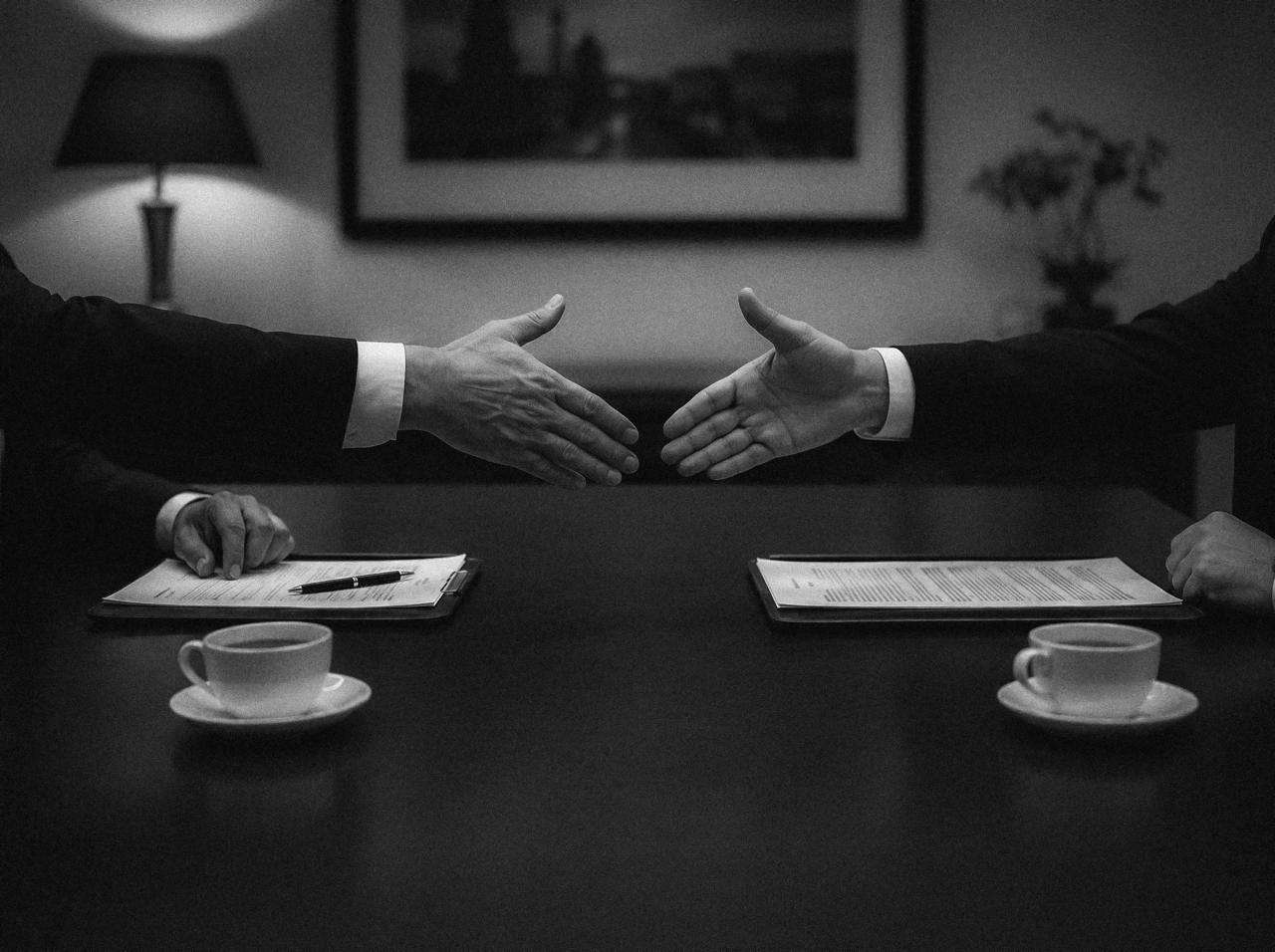
Forgiveness does not negate justice nor does it absolve one of responsibility for one’s actions, but it frees a person from the heavy burden of hatred, restores their inner peace and makes them stronger than those who live in bitterness and a thirst for revenge. Forgiveness is an act that heals, first and foremost, the one who forgives, opening up a path to reconciliation and a new life.
To win without war means to reject aggression and destruction and to choose the path of dialogue, mutual understanding and respect. This is not a defeat for the other side, but the achievement of shared growth and the strengthening of relations built on trust and peace. Such a victory requires the ability to see the other person not as an enemy, but as an individual worthy of respect, and to prioritise shared interests over personal ambition and pride. True triumph lies not in humiliating one’s opponent, but in restoring the unity that makes both sides stronger.
The path to reconciliation always begins with a willingness to honestly acknowledge the conflict and recognise its causes. This requires setting aside pride and the desire to prove oneself right at any cost. Reconciliation begins when at least one of the parties takes the first step, shows initiative, opens their heart to dialogue and strives for mutual understanding. One must be able to speak honestly and openly, without accusations or judgement, with a sincere intention to listen to the other person, show compassion and see the situation through their eyes. Such a step requires wisdom and courage, but it is precisely this that paves the way for healing and true peace.
Human history is full of examples where the power of forgiveness has proved stronger than revenge. Germany and France, which had been enemies for centuries and had endured the horrors of the world wars, found the strength to forgive one another and unite for the sake of peace and prosperity in Europe. Nelson Mandela, having spent 27 years in prison, did not call for revenge, but chose the path of reconciliation and unity for all the peoples of South Africa. Pope John Paul II, having survived an attempt on his life, publicly forgave the man who had tried to kill him and showed the world that spiritual strength is always greater than human hatred. These examples remind us that forgiveness and reconciliation have the power to change not only the fate of individuals, but also the history of entire nations.
For me, choosing forgiveness is not just a nice idea, but a deep conviction, confirmed by experience and rooted in faith. Forgiveness opens the way to inner freedom, restores strength and the joy of life, and enables us not to remain prisoners of the past. I choose forgiveness because it breaks the cycle of evil and hatred, because it builds rather than destroys, and because it makes not only me but also those around me stronger.
I am convinced that true victory is not achieved through weapons or power, but is born where people find the strength within themselves to forgive one another and extend a hand of reconciliation. Victory without war is neither a utopia nor a sign of weakness, but the only path to a peace that will stand the test of time.
With faith in God, forgiveness and the future.
I am honoured!
Andrey Gmyrin
